


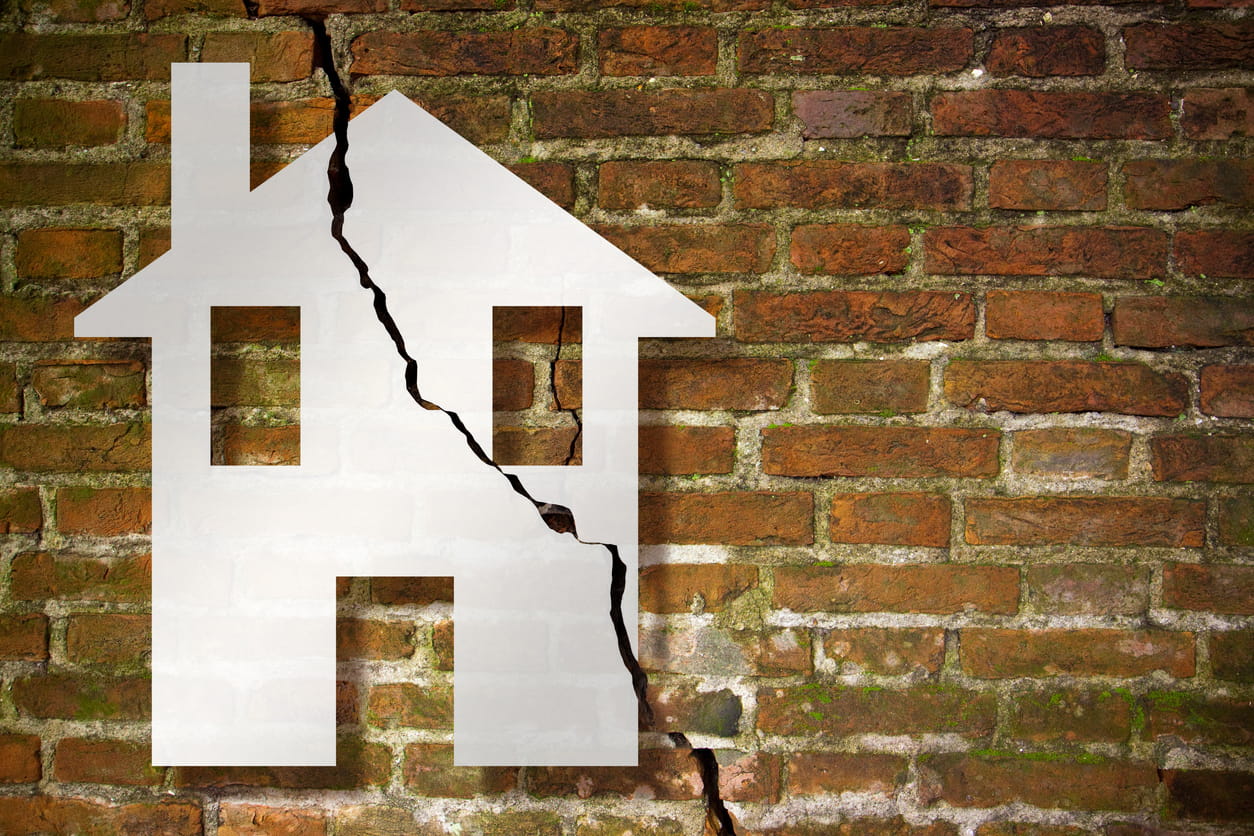
What is subsidence?
As a homeowner, subsidence is a serious hazard as it can cause expensive damage and extreme safety hazards, but what is subsidence?
Subsidence is when the ground beneath a property sinks and drags down the property foundation with it. This can then cause damage to the walls, floor and structure of a property. If not dealt with, it can make a property uneven, cause cracks and cause a serious safety hazard.
What causes subsidence?
Subsidence can be caused by many different reasons, both natural and human-caused. The most common causes of subsidence include clay shrinkage, trees and vegetation, poor foundations, drain leaks, mining and climate.
Clay shrinkage
properties built on clay soil are susceptible to subsidence as clay soil can change consistency based on the conditions. In dry weather, clay soil can crack, shift and shrink causing the ground to sink.
Trees and vegetation
Trees, bushes and large plants near properties can often grow roots under the property. This can then shift and weaken the ground that the property is built on. Roots under a property can also exasperate the risk of clay shrinkage by soaking up the water and drying out the clay soil.
Poor foundations
Foundations of older buildings are prone to damage over time which can cause subsidence. Also, poorly designed foundations put a property at risk - it's important that the foundation's soil investigation, depth and foundation type are adequate and sufficient.
Drain leaks
Underground drainpipes that are broken or have a leak can wash away the surrounding soil, which impacts the foundation of the building and can lead to subsidence.
Mining
Any nearby excavation work can disrupt the ground beneath a property and cause it to move, leading to subsidence. Properties built above former mines are also susceptible to subsidence due to the ground underneath them being weaker.
Climate
The weather can also play a part in a building subsiding. Cold weather can cause frozen pipes underground which can burst and cause a leak, and periods of heavy rain followed by dry spells can cause ther ground to expand and contract.
Signs of subsidence
There are various different factors that you can spot in your property which may indicate signs of subsidence.
Cracks in walls
Visible cracks in walls and wallpaper can indicate that the wall is starting to sink, It should especially be a concern if the crack is larger than 3mm.
Doors and windows becoming misaligned
A shift in the height of the property due to subsidence will impact the fittings of doors and windows and can cause them to become misaligned.
Uneven floors
If the floors are uneven or sloping, this means that the housing foundations are no longer straight, which could be due to subsidence.
How to prevent subsidence
Due to the cost of fixing it, it's crucial to avoid subsidence as a property owner. Here are some tips to reduce your property's chances.
Trees
When planting trees, it's important that they aren't too close to the property, to avoid the roots growing under it and causing subsidence.
Maintaining plumbing
Ensuring that the pipes that support your property are well maintained can help to avoid leaks damaging the soil under the property.
Underpinning
Underpinning means to extend the property's foundation, either wider or deeper, to strengthen it and mitigate the risk of subsidence.
Do I need subsidence insurance?
As it can be very difficult to fix, subsidence can become an extremely expensive cost, so having sufficient cover can offer peace of mind.
Subsidence is covered as standard as part of HomeLet's Buildings insurance and Buildings and Contents insurance.
FAQs
Do I need to declare subsidence?
Before setting up an insurance policy with HomeLet, you must make us aware if the property is not in a good state of repair. Any changes to the state of your property during your policy should always be communicated to your insurance provider.
Can subsidence cause a building to collapse?
If early signs of subsidence are ignored and the property is not well maintained, prolonged subsidence can make a building collapse. It's therefore important to look out for any signs of subsidence and make sure it is treated as early as possible.
How much does it cost to fix subsidence?
The cost of fixing a property which has subsided will depend on a lot of factors, such as the amount of structural and foundational damage. According to Checkatrade, the average cost is around £12,500, however, costs can massively vary depending on what work is needed.
Enjoying our content?
Get the latest letting news, views and tips from HomeLet straight to your inbox.